Wednesday, January 25, 2017

Rules of Love: Restrictive or Freeing?

Did anyone else get the impression from the readings that courtly love makes love more confusing and frustrating than it already is? Call me individualistic, but there’s something not quite right about spelling out particular rules for something that is so personal and intimate and variable. No couple will have exactly the same love as another, so why try to standardize it so completely? If this is love, then I’m not so sure I want to get involved.

And yet, Rule 8 of Love is “No one should be deprived of love without the very best of reasons” (Capellanus 185). Great.

Capellanus establishes “no homo” in Chapter 2, but I bet he never thought of this! My roommate has an out!

Courtly love’s relationship with marriage also threw me off . . . at first. Then it intrigued me. “Feudal nobility arranged marriage to suit families’ advantages, often while the children were still infants” (Thompson). Yet the rules of courtly love and the stories that concern them don’t seem too concerned with honoring these marriages if love conflicts. After all, Rule Number 1 of Love is don’t talk about—er, I mean, “Marriage is no real excuse for not loving” (184). We see this played out too perfectly in the summary that Dr. Diane Thompson gives of Marie de France’s Eliduc. Eliduc’s wife seems to experience no anger or pain from her husband falling in love with another woman. To me, she seems a little too content to become a nun while Eliduc marries his new love.

Marriages arranged for advantage, convenience, and gain have no promise of love for the spouses-to-be. Perhaps Eliduc and his first wife were in a loveless arranged marriage. Perhaps they really were happy to leave each other. Perhaps tales of courtly love, and the prioritization of love over marriage vows, provided hope and comfort to nobles in arranged marriage. Just as many people today (myself included) enjoy stories that provide an escape, maybe stories of courtly love provided an escape from the reality of marrying for social climbing and political alliances rather than for love.
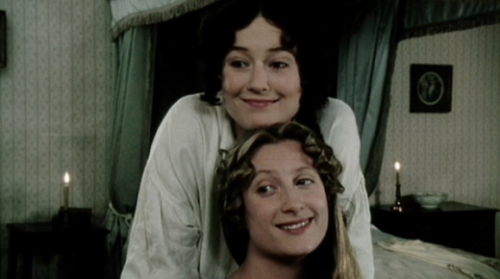
"I am determined that only the deepest love will induce me into matrimony. So, I shall end an old maid, and teach your ten children to embroider cushions and play their instruments very ill."


Wow. We've needed the comfort and daydreams a lot over the centuries, haven't we?

Capellanus, Andreas. The Art of Courtly Love. New York: Columbia University Press, 1960.

Thompson, Diane. “Courtly Love Study Guide.” Northern Virginia Community College.

I pledge that I have neither given nor received any unauthorized aid on this assignment.

Miranda A. Barrientos

Of Cougars & Knights

The principles of courtly love genuinely surprised me when I read about how men under the age of 18 supposedly cannot love.  Yes, I’m sure we’ve all had our fair share of 13 year-old selves believing they are in love (especially with Justin Timberlake, or is that just me?), but who’s to say that we cannot learn from those dark, selfie filled times?  However, age does not equate to maturity and I find that the reading uses maturity as a necessity for love.  “Love” in this passage seems to be defined as a broader term as opposed to what we would find “true love” from typical fairytales.  Placing these conditions into the mind-set of people in the 21st century is like hearing your grandparents tell you about “the good ole days” as they quake with despair as they watch “teens these days” treat love as something disposable like lust. 

Courtly love is similar to our society’s ideals in the differentiation between passion, lust and love.  There is a recognition that passion and lust are pieces in the great puzzle of love, but do not correlate to the phenomenon itself.  The idea in courtly love that if one becomes impoverished, it can only damage the love is a complete 180 flip from the fictional ideals of “for richer or for poorer”.  Love being unconditional is an all-known fictional ideal that has wormed its way into the vows of married couples for years.  However, the courtly love idea rings true for most couples, leading to numerous divorces and fights.

The original audience for tales of courtly love was women.  These tales gave men a set of guidelines to courtly love to prevent them from roaming the lands and raping women.  It taught chivalry with the proper romantic tricks.  It gave power to the women (the beloved) over whom they chose to love.  The implications are more than a sexual response to another human, it is a mental one.  Courtly love focuses on what we would call ‘genuine connection’ between two individuals.  It cannot be neither forced nor feigned nor denied.  The concreteness of feelings is explored in depth for lovers near and far with courtly love, as well as the women’s ability to muster a form of power over the men.   


Fairy tales of romance written about couples that are not married is a foreign subject.  During the time period, most people didn’t marry for love, but for practicality - which isn’t as foreign as romance stories for unmarried couples.  It was a creative, entertaining outlet that taught young men ways to woo a woman and to extend future marriages to greater heights.  Also, I find it laughable that the stories include Cougars and Sugar Mommas.  I find that the power that comes from money and prestige is still a part of these tales despite the attention on mental wooing methods.  Evidently, love appeals to most people despite the lack of it in peoples’ real lives.  It’s nice to see how women took the reigns on the horse of love and managed to drag it out of muddied pits to polish and present to us all. 

Tuesday, January 24, 2017

Court and Spark


Court and Spark

“Love came to my door

With a sleeping roll

And a madman’s soul
He thought for sure I’d seen him

Dancing up a river in the dark

Looking for a woman
To court and spark”

--Joni Mitchell

As Dr Schwartz’s analysis of Campellanus’ “The Art of Courtly Love” suggests in Marie, Countess of Champagne’s France, courtly love was a model of  “behavior for a class of unmarried young men that might otherwise have threatened social stability.” This offered a guide, a template for a sophisticated version of wooing, or “courting”, putting men in “love service rather than wandering around the countryside, stealing or raping women”, as was almost a typical script of knighthood. 

Some suggest these enterprising society women elevated themselves to an equal status through this art of courtship and the power it afforded them, but I only see a game they were allowed to play until such time—through loss of their standing in society, or their “Lord” deemed it appropriate – that those freedoms of will would be eliminated as he saw fit. 

From another vantage, because she’s a women, even a Countess has to look to a man’s work, the Latin poet Ovid’s, revised by yet another, Capellanus and finally credited to him as author of the ‘rule book” of courtship. When Campellanus revised a wholly different version later, his patriarchal (Christian) roots trumped the Countess’ position, weighing the criminal accusation that all women were “Eve” and had “characters like that of the serpent” (Courtly Love Study Guide, Thompson) all the while praising women for the Virgin Mary’s salvation and redemption. These perceptions were all without merit or a women’s perspective.

I think, though, Courtly Love also served as a fairly accurate commentary on medieval women’s inability to garner anything close to equality with men. Rather than “elevate” women’s status in society as some would claim, I think it only points to the depravity of patriarchal norms that women were forced to live through. 

Still, one might also claim this courtship with its set “codes” or “rules” a man must adhere to in pursuing a woman’s affection was the perfect outlet for a frustrating, confined, if not boring existence (a society women) would live with lacking an ability to contribute, except through sex.

The control – or the premise of it at least – bestowed on these society “babes”, acted out in their quite serious game, was paramount to Eleanor and Marie’s existence, I think, because it also gave them at least the possibility, the option, of sexual attention, or satisfaction, within the patriarchic confines of the day.

It’s hard to not romanticize this period, certainly, giving these women credit for celebrating the poetry of the “troubadorean” “works of Venus” -- flirtation, courtship, love, and sex -- because lets face it, with their knights out gallivanting in adventurous endeavors, often having sexual conquests of their own outside of marriage, courtship was a way to even the playing field if only a little bit. Besides, as Campellanus says, Courtly Love “makes a man shine with so many virtues and teaches everyone, no matter who he is, so many good traits of character!” 

Rules?

I find it really interesting that here are so many rules on courtly love. Rules? Rules about love? That makes absolutely no sense. Mainly because some of the rules are absolutely ridiculous. For instance it says "How Love May be Retained," and then says "keep it secret," and while I understand why it says this it isnt something that I think is true. Then it says "jealously increases love." and that isnt true either. These are things that scream toxic... but I guess they would make for an interesting story.


I like that this idea of courtly love revolves around staying within a Catholic religion. It shows how during a certain time period religion was something valued. These views on love and what love is are actually vaguely similar to what people think love means today (but are completely wrong about.) Its kind of funny because mostly women are into these types of literature which isnt surprising. It kind of explains why people think that certain aspects that come with falling in love "just happen," because thats what love is and it isnt.

The ideas that keeping secrets and jealously are ways to hold a relationship or to maintain love are associated with the idea of drama. I can understand why these things are found within literature because it keeps it interesting but it impacts the thoughts of people reading or watching.

Apparently blasphemy and anti-religious behavior will cause failure in love, and I find that comical. The values they had and the importance of religion are way different than today. There are people whos religion is a primary thing within their relationship but I feel like it isnt taken as seriously now as it was then.

In general I dont understand how rules were put on love, because there are no rules. Everyone is different.

Love or Obsession?

I believe the most interesting thing about the essence of romance in the Middle Ages was based on rules. Not only that love was based on rules but that women frequently tended to enjoy a lot more than men. I can see why these women would enjoy such a reading because they are actually viewed as an equivalent and significant to men rather than something of lesser value. This could even make women feel empowered and maybe even more appreciated.  By reading the rules of Courtly Love, I can clearly see how much romance has changed and the extent at which it has changed as well.

The court of love defined courtly love as” Love is a certain inborn suffering derived from the sight of and excessive meditation upon the beauty of the opposite sex, which causes each one to wish above all things the embraces of the other and by common desire to carry out all of love’s precepts in the other’s embraces.” In modern romance, love and suffering tend to go hand in hand, but in the Middle Ages infatuation and obsession go together, not necessarily “love”. Courtly love tends to be shallow and sensual in my opinion because it focuses on the “beauty of the opposite sex” and there tends to be a great amount of embracing. Many romance novels today resemble the “bodice ripping” kind of love which can be translated to being demeaning to women today.

In the Middle Ages, “He who is not jealous cannot love”. In romance today, one lover making another jealous is prominent in romance. According to this rule those who play mind games really love each other. In today’s society using jealousy to keep a lover seems foolish. Being that trust is so big and is a possible integral part of love, it makes playing on jealousy counterproductive. This could be a speculation, but maybe in the Middle Ages, this rule was not associated with jealousy but with passion. What I mean by this is that a lover is willing to do anything for their love. Yes, even myself find making someone jealous to find true love is slightly petty but, modern romance still makes room for this ritual.

Courtly Love was definitely looked down upon by a large population of the intellectuals in the Middle Age society. The intellectuals that were in this society read things in Latin, and unfortunately Courtly Love was written in French. In today’s world, (a little speculation) people may put love off until they reach certain career goals or they think that they won’t find love because they are intelligent. Possibly, wealthy people today may not feel as if they have anything in common with someone who is less wealthy or less intelligent than them, so there is a minor correlation in intelligence and wealth in when love is involved in today’s society. Although, I believe that more people are open to understanding in today’s society than in the Middle Ages, I still find that minor correlation interesting to bring up.

Will the world ever revert back to these rules? I could never know in the world we are living in right now I would say that Modern lovers are trying to stray away from tradition instead of following rules. I know that Romance has changed since the days of Eleanor of Aquitaine but there is definitely some consistency in the way that men and women till play mind games, love has always been considered a two-way street, and lovers always have a common ground for passion and trust in relationships today. I loved seeing the correlation between Modern Romance and Romance in the Middle Ages.